
Is it time to stop talking about change?
Change is the stock‑in‑trade of management consultants. Yet an uncomfortable question sits beneath the rhetoric – how much real change do we help our clients achieve?
In the crowded world of change consulting, it is easy to deliver persuasive frameworks, compelling language and elegant slide decks. It is harder to ensure that organisations actually behave differently once the consultants have left. Do we deliver change, or do we merely talk about it?
That question set the tone for a recent Shoptalk session hosted at The Lamb in Bloomsbury, where Steven Suckling and Julie Linsdell, relatively new members of the Company, shared practical reflections from their experience of change and transformation consulting.
What are organisation changes?
The session opened by unpacking a deceptively simple issue – what ‘business change’ actually is. Steve outlined three distinct levels of change that help shape how engagements are defined, planned, costed and delivered for large organisations.
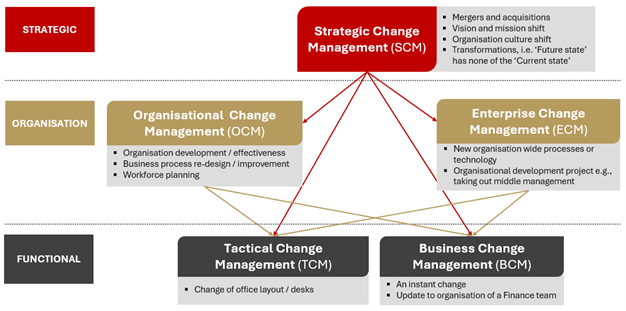
At the ‘functional’ level, most change is delivered in‑house, accounting for around 10-15 per cent of overall activity. ‘Organisation’ wide change represents the majority, 70-75 per cent and is often where external support is brought in, particularly where internal change capability or a programme office is absent. ‘Strategic’ change, while highly visible, typically represents only 10–15 per cent of activity and mostly involves using external expertise.
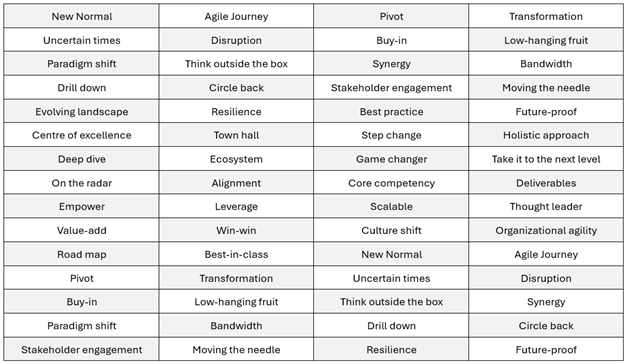
Walking through the assumptions behind this split proved helpful, grounding the discussion in practical experience rather than theory. Steve then introduced ‘change bingo’ - a light‑hearted but pointed illustration of how different consulting disciplines develop their own language. The challenge was simple: does the language we use mean the same thing to all stakeholders, and do they genuinely add value for clients?
Making change happen – putting people first
If there is one word that dominates transformation programmes, it is change. Yet organisations continue to struggle to make it stick, often for one fundamental reason. Julie made the clear distinction that transformation is what the business goes through; change is what people go through.
New systems, structures and operating models can be designed and implemented. But unless people understand them, accept them and embed them into daily work, transformation remains little more than well intentioned. Without behavioural change, the technical change delivers limited value.
This distinction highlights two related but different disciplines. Business change defines the ‘what;’ the future state, new capabilities or redesigned ways of working. Change management defines the ‘how; leadership, engagement, communication, training and adoption. From her experience Julie shared that when these blur together, the people side is often diluted in favour of delivery milestones. However, programmes that succeed tend to focus on a handful of consistent principles:
- Creating a clear and compelling case for change
- Visibly leading, not delegating leadership
- Involving people early and treating adoption as seriously as implementation
- Embedding change through incentives, governance and performance measures so that old habits do not quietly return.
Culture ultimately determines whether change succeeds. Understanding how an organisation really works, beyond what appears on slides, is what shapes interventions that endure.
Julie concluded by sharing that large transformations may need one additional role. Not just a Chief Transformation Officer, but occasionally a “Chief WTF Officer; someone prepared to stop the room and ask the awkward questions: What problem are we actually solving? Who benefits? What behaviour are we reinforcing? Should we be doing this at all?
Because sometimes, the most valuable contribution to change is ensuring it makes sense in the first place.
Shoptalk Bios
Steven Suckling is a Technical Director at Mott MacDonald, specialising in management consultancy and business change. He is known for people and customer‑led approaches that align change initiatives with strategic goals in complex stakeholder environments, helping realise value, build trust and inspire commitment.
Julie Linsdell is an experienced programme manager and director with a history of delivering high‑value, cross‑functional transformation. She specialises in performance, controls and governance, embedding inclusive, high‑performing cultures across large, multi‑site and international programmes to deliver at pace and scale.
Steven Suckling is Technical Director at Mott MacDonald and a member of the CMCE Management Team.